Springer Nature
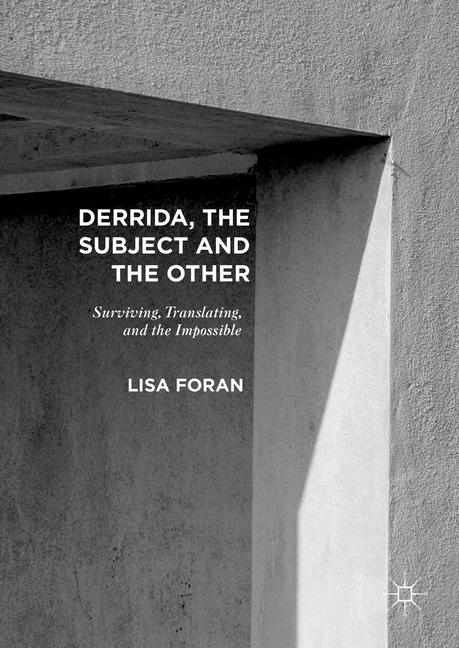
Derrida, The Subject And The Other
Miglior prezzo disponibile
99,99$
Springer Nature · Spedizione gratuita
VISAPayPal
Prezzi aggiornati
Specifiche
MarcaSpringer Nature
CondizioneNuovo
Descrizione
This book presents the relation between the subject and the other in the work of Jacques Derrida as one of âsurviving translatingâ. It demonstrates the key role of translation in thinking difference rather than identity, beginning with the work of Martin Heidegger and Emmanuel Levinas. It describes how translation, and its ethical demands, acts as a leitmotif throughout Derridaâs writing; from his early work on Edmund Husserl to his last texts on politics and hospitality. While for both Heidegger and Levinas translation is always possible, Derridaâs account is marked by the challenge of impossibility. Expanding translation beyond a merely linguistic operation, Foran explores Derridaâs accounts of mourning, death and âsurvivalâ to offer a new perspective on the ethics of subjectivity.Â
Storico prezzi
Ricevi una notifica se il prezzo scende
Ti invieremo un'email quando il prezzo di questo prodotto diminuirà.
- Aggiornamenti dei prezzi in tempo reale
- Oltre 50 negozi monitorati
- Avvisi gratuiti di calo prezzo
- Solo negozi verificati
Avvisami quando il prezzo scende sotto: 99,99$
Prodotti simili
Una selezione di prodotti che potrebbero interessarti. Guarda tutti
 Derrida, The Subject And The Other
79,99$
Derrida, The Subject And The Other
79,99$
 Derrida, Africa, And The Middle East
39,99$
Derrida, Africa, And The Middle East
39,99$
 The Reception Of Derrida
54,99$
The Reception Of Derrida
54,99$
 Marion And Derrida On The Gift And Desire: Debating The Generosity Of Things
109,99$
Marion And Derrida On The Gift And Desire: Debating The Generosity Of Things
109,99$
 The Singular Politics Of Derrida And Baudrillard
54,99$
The Singular Politics Of Derrida And Baudrillard
54,99$
 Memoirs Of The Blind: The Self-Portrait And Other Ruins Derrida, Jacques ; Brault, Pascale - Anne (Translator) ; Naas, Michael (Translator) Art,Philosophy & Religions
42,64$
Memoirs Of The Blind: The Self-Portrait And Other Ruins Derrida, Jacques ; Brault, Pascale - Anne (Translator) ; Naas, Michael (Translator) Art,Philosophy & Religions
42,64$
 Derrida And Law Justice And The Violence Of Legality
48,79$
Derrida And Law Justice And The Violence Of Legality
48,79$
 The Subject, Capitalism, And Religion
54,99$
The Subject, Capitalism, And Religion
54,99$