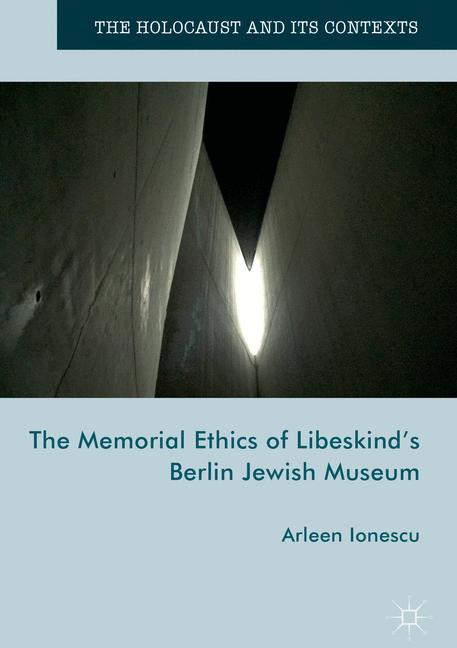
This book is a detailed critical study of Libeskindâs Berlin Jewish Museum in its historical, architectural and philosophical context. Emphasizing how the Holocaust changed our perception of history, memory, witnessing and representation, it develops the notion of âmemorial ethicsâ to explore the Museumâs difference from more conventional post-World War Two commemorative sites. The main focus is on the Museum as an experience of the materiality of trauma which engages the visitor in a performative duty to remember. Arleen Ionescu builds on Levinasâs idea of âethics as opticsâ to show how Libeskindâs Museum becomes a testimony to the unpresentable Other. Ionescu also extends the Museumâs experiential dimension by proposing her own subjective walk through Libeskindâs space reimagined as a âliterary museumâ. Featuring reflections on texts by Beckett, Celan, Derrida, Kafka, Blanchot, Wiesel and Selma Meerbaum-Eisinger (Celanâs cousin), this virtual tour concludes with a brief account ofLibeskindâs analogous âhealing projectâ for Ground Zero.