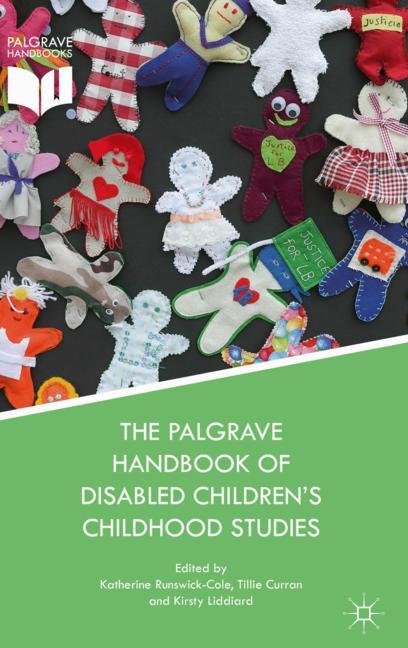
Disabled childrenâs lives have often been discussed through medical concepts of disability rather than concepts of childhood. Western understandings of childhood have defined disabled children against child development ânormsâ and have provided the rationale for segregated or âspecialâ welfare and education provision. In contrast, disabled childrenâs childhood studies begins with the view that studies of childrenâs impairment are not studies of their childhoods. Disabled childrenâs childhood studies demands ethical research practices that position disabled children and young people at the centre of the inquiry outside of the shadow of perceived ânormsâ. The Palgrave Handbook of Disabled Childrenâs Childhood Studies will be of interest to students and scholars across a range of disciplines, as well as practitioners in health, education, social work and youth work.