Springer Nature

Security And Privacy In Smart Grid
Miglior prezzo disponibile
39,99$
Springer Nature · Spedizione gratuita
VISAPayPal
Prezzi aggiornati
Specifiche
MarcaSpringer Nature
CondizioneNuovo
Descrizione
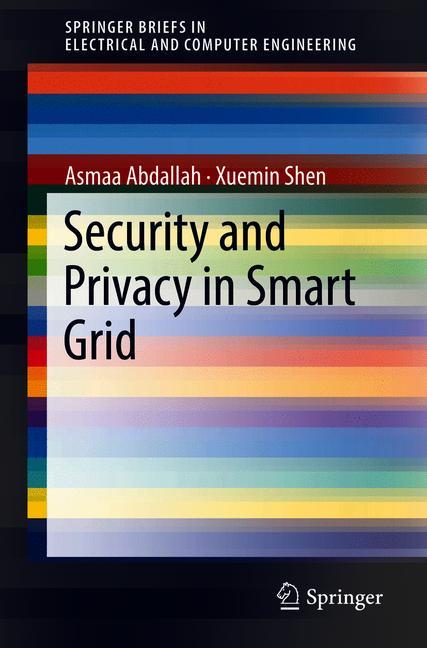
This SpringerBrief addresses the main security concerns for smart grid, e.g., the privacy of electricity consumers, the exchanged messages integrity and confidentiality, the authenticity of participated parties, and the false data injection attacks. Moreover, the authors demonstrate in detail the various proposed techniques to secure the smart gridâs different communication networks and preserve the privacy of the involved. Over many years, power grid has generated electricity from central generators and distributed it in one direction from the generation stations to end-users; also, information is one directional so that the gridâs control center doesnât get enough information about customersâ requirements and consequently canât prevent electricity losses. So, the electricity grid is merged with information and communication technology to form smart grid. The main target of this incorporation is to connect different parties of power grid to exchange information aboutgrid conditions and customersâ requirements, and consequently, improve the reliability and efficiency of electricity generation and distribution. That upgrade of the power grid exposes it to the cyber security threats that the communication networks suffer from, such as malicious attacks to forge the electricity consumption readings or price, extract personal information for residential consumers, such as daily habits and life style, or attack some gridâs resources and equipment availability using denial-of-service attacks. Also, novel threats are introduced in smart grid due to the power grid nature, such as false data injection attack, in which the adversary compromises several measurement units and injects false information about the grid conditions that mislead the gridâs control center to make wrong decisions for the grid and consequently impact on its stability and efficiency.
Storico prezzi
Ricevi una notifica se il prezzo scende
Ti invieremo un'email quando il prezzo di questo prodotto diminuirà.
- Aggiornamenti dei prezzi in tempo reale
- Oltre 50 negozi monitorati
- Avvisi gratuiti di calo prezzo
- Solo negozi verificati
Avvisami quando il prezzo scende sotto: 39,99$
Prodotti simili
Una selezione di prodotti che potrebbero interessarti. Guarda tutti
 Security And Privacy In Smart Grid
54,99$
Security And Privacy In Smart Grid
54,99$
 Cyber-Physical Security And Privacy In The Electric Smart Grid
19,99$
Cyber-Physical Security And Privacy In The Electric Smart Grid
19,99$
 Smart Micro-Grid Systems Security And Privacy
109,99$
Smart Micro-Grid Systems Security And Privacy
109,99$
 Security And Privacy In Smart Environments
27,99$
Security And Privacy In Smart Environments
27,99$
 Big Data Privacy And Security In Smart Cities
109,99$
Big Data Privacy And Security In Smart Cities
109,99$
 Security And Privacy In Cyber-Physical Systems And Smart Vehicles
64,99$
Security And Privacy In Cyber-Physical Systems And Smart Vehicles
64,99$
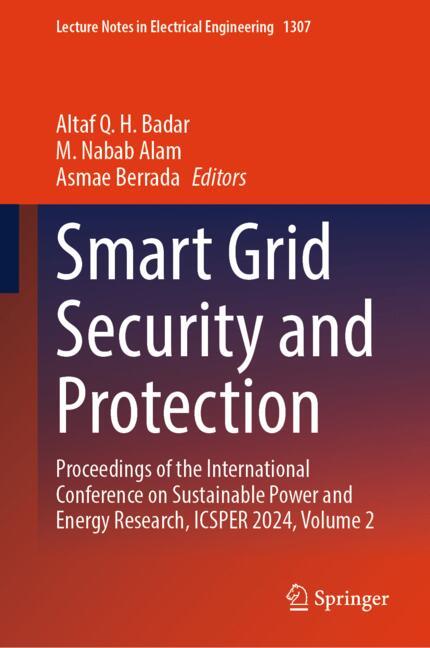 Smart Grid Security And Protection
259,00$
Smart Grid Security And Protection
259,00$
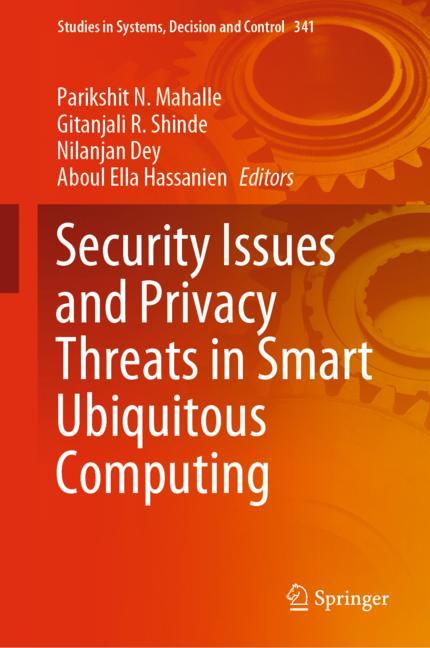 Security Issues And Privacy Threats In Smart Ubiquitous Computing
199,99$
Security Issues And Privacy Threats In Smart Ubiquitous Computing
199,99$